Fuel, Movement, and Mobility
A simple plan built around keto first, then a high-protein low-carb paleo style approach, supported by walking, strength training, and daily hip-focused mobility.
Diet Plan
Start with a keto reset to reduce bloating, inflammation, cravings, and carb dependence. After 6-8 weeks, transition into a high-protein, low-carb paleo style plan.
Phase 1: Keto Reset
Diet Steps
- Keep the intermittent fasting window: roughly 9 PM to 1 PM.
- Break the fast with a protein-heavy first meal.
- Keep carbs very low during the keto reset.
- Avoid bread, rice, pasta, sugar, and gluten-heavy foods.
- Prioritize protein first, vegetables second, fats third.
- Drink plenty of water and consider electrolytes during the first 1-2 weeks.
- Track weight, waist, energy, and bloating weekly.
Simple Keto Meal Structure
Foods to Focus On
- Eggs
- Chicken
- Rotisserie chicken
- Ground beef
- Steak
- Salmon
- Tuna
- Pork loin
- Turkey
- Broccoli
- Cauliflower
- Green beans
- Asparagus
- Zucchini
- Bell peppers
- Salad greens
- Cucumbers
- Avocado
- Avocado oil
- Olive oil, not olives
- Butter
- Cheese
- Nuts in controlled portions
Phase 2: High-Protein Low-Carb Paleo
Open when keto reset is complete
Phase 2 begins after the keto reset, usually around weeks 6-8, or once weight is down, cravings are controlled, and bloating is noticeably better. The goal is to keep the fat-loss momentum while adding enough clean carbs to support walking, strength training, and Couch-to-5K.
Phase 2 Macro Targets
| Protein | Keep the same: 150-180g per day. Do not lower protein when adding carbs. Protein stays the anchor for fat loss, muscle retention, and recovery. |
|---|---|
| Carbs | Start at 50-75g per day, then increase to 75-125g per day if energy, digestion, and weight loss remain good. |
| Fat | Reduce from keto levels. Fat should move from “main fuel” to “supporting fuel.” Use enough for satiety, but stop adding extra fat just to hit keto-style numbers. |
How to Transition From Keto
- Week 1: Add 25-40g carbs per day from berries, sweet potato, or squash.
- Week 2: Move toward 50-75g carbs per day if bloating stays low.
- Week 3+: Use 75-125g carbs mostly around run days or harder training days.
- Keep bread, pasta, rice, cereal, and gluten-heavy foods out unless you intentionally test them later.
- If bloating returns, reduce the newest carb source first.
Foods to Add Back First
- Berries
- Sweet potato
- Butternut squash
- Acorn squash
- Carrots
- Beets
- Apples
- Bananas
- White potatoes
- Pumpkin
- Extra vegetables
- Bread
- Pasta
- Rice
- Cereal
- Pastries
- Gluten-heavy foods
How to Reduce Fat From Keto
As carbs come up, fats need to come down. Otherwise the plan can become high-fat and higher-carb, which makes weight loss much harder.
| Reduce | Heavy cream, extra cheese, large nut portions, fat bombs, excessive butter, large avocado portions. |
|---|---|
| Keep | Lean meats, eggs, salmon, olive oil, avocado oil, controlled cheese, controlled nuts, whole-food fats. |
| Simple Rule | When adding a carb serving, remove one added-fat serving. Example: add sweet potato at dinner, but skip extra butter, extra cheese, or large avocado. |
Run Day Carb Strategy
For early Couch-to-5K, you probably do not need a big carb load. The runs are short intervals. The purpose of carbs is to support energy without bringing back bloating or cravings.
- If you feel good fasted, run fasted.
- If energy is low, eat 1/2 banana or a few berries 20-30 minutes before.
- Hydrate before the run.
- Electrolytes help if you are still lower-carb.
- Eat normal protein-focused meals earlier.
- Add 25-40g carbs at the meal before the run.
- Use sweet potato, berries, or fruit.
- Avoid heavy fats right before running.
- Add carbs the night before if running in the morning.
- Add carbs after the run to recover.
- Keep protein the same.
- Reduce fats that day to balance calories.
Night Before a Morning Run
For early Couch-to-5K, do not carb-load heavily the night before. Instead, add a moderate carb serving at dinner if the next morning’s run feels better with it.
- Good option: chicken, vegetables, and 1/2 to 1 small sweet potato.
- Good option: salmon, salad, and roasted squash.
- Good option: lean burger patty, green beans, and berries.
- Avoid: bread, pasta, rice, pizza, dessert, or heavy gluten-based meals.
Pre-Run Options
| Fasted Run | Best for easy walk/run sessions if energy is stable. Hydrate first. |
|---|---|
| Small Carb Boost | 1/2 banana, berries, or a few bites of sweet potato 20-30 minutes before running. |
| Avoid Pre-Run | Heavy fats, large meals, cheese-heavy foods, nuts, greasy foods, or anything that causes bloating. |
Post-Run Meal
After running, return to protein first. You do not need to overeat because you ran.
- Protein target: 40-60g at the next meal.
- Add 25-40g carbs if the run was hard or energy is low.
- Keep fats moderate at that meal.
- Example: chicken, vegetables, and sweet potato.
- Example: eggs, turkey sausage, and berries.
- Example: protein shake plus a banana if you need something quick.
Simple Phase 2 Day Examples
- 1 PM: eggs, turkey, avocado, vegetables
- Snack: protein shake or cottage cheese
- Dinner: steak or chicken with broccoli
- Carbs: 50-75g mostly from vegetables and berries
- Optional pre-run: 1/2 banana or fasted
- 1 PM: chicken, vegetables, berries
- Snack: Greek yogurt or protein shake
- Dinner: lean protein, vegetables, sweet potato
- Carbs: 75-125g
- 1 PM: protein-heavy meal with vegetables
- Pre-run meal: protein plus 25-40g carbs
- Post-run: protein-focused dinner
- Keep fats lighter before the run
- Carbs: 75-125g
Phase 2 Guardrails
- If weight loss stalls for 2 full weeks, reduce carbs by 25g or reduce added fats.
- If bloating returns, remove the newest carb source and retest later.
- If running feels flat, add 25-40g carbs the night before or after the run.
- If hunger increases, check protein first before adding more fat.
- Keep the 9 PM to 1 PM fasting window if it still feels natural.
Exercise Plan
This plan combines walking, strength training, and a future Couch-to-5K progression. The goal is to lose fat, preserve muscle, build consistency, and get more fit without needing a gym.
Weekly Structure
Weekly Schedule
Workout A
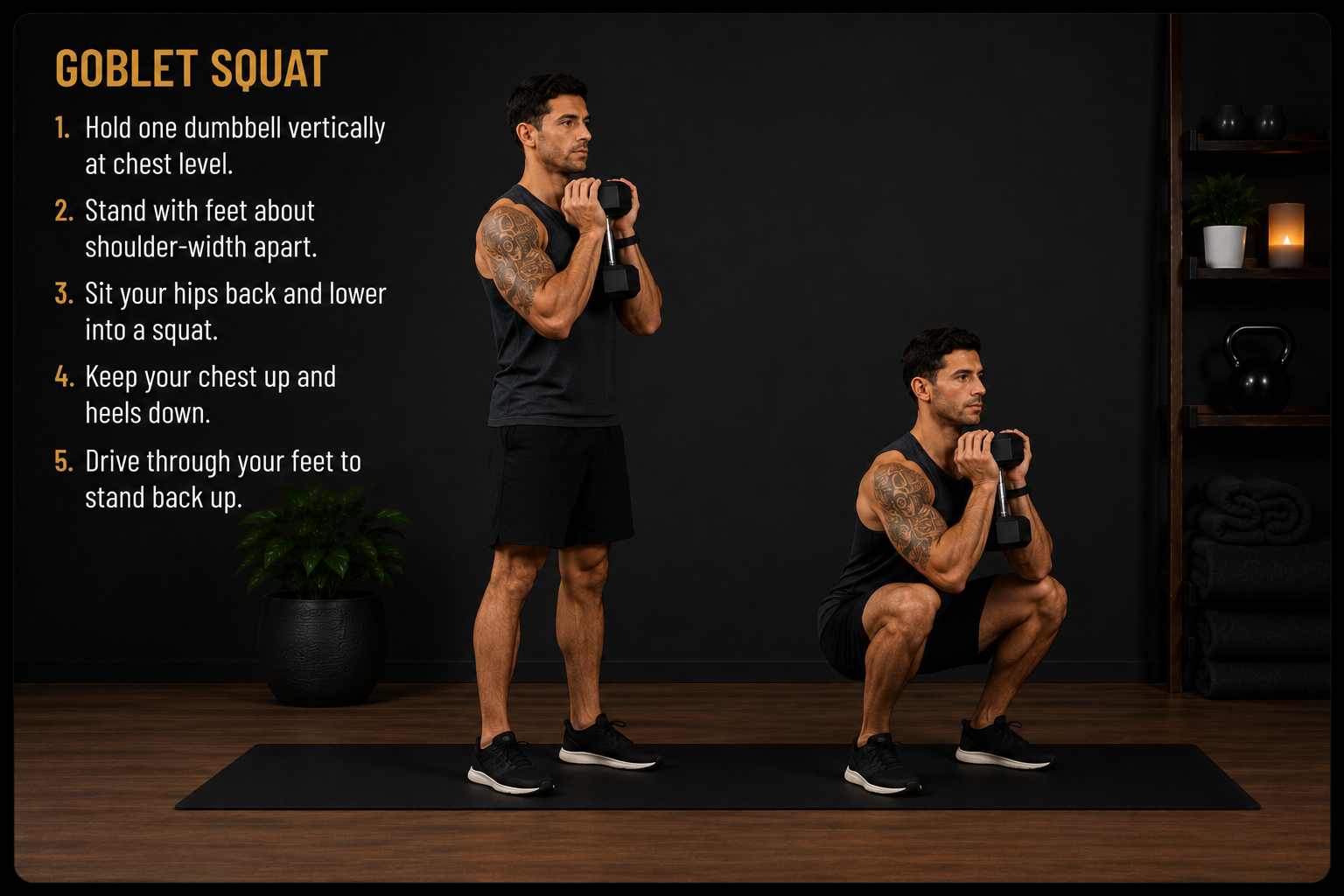
1. Goblet Squat
- Hold one dumbbell vertically at chest level.
- Stand with feet about shoulder-width apart.
- Sit your hips back and lower into a squat.
- Keep your chest up and heels down.
- Drive through your feet to stand back up.
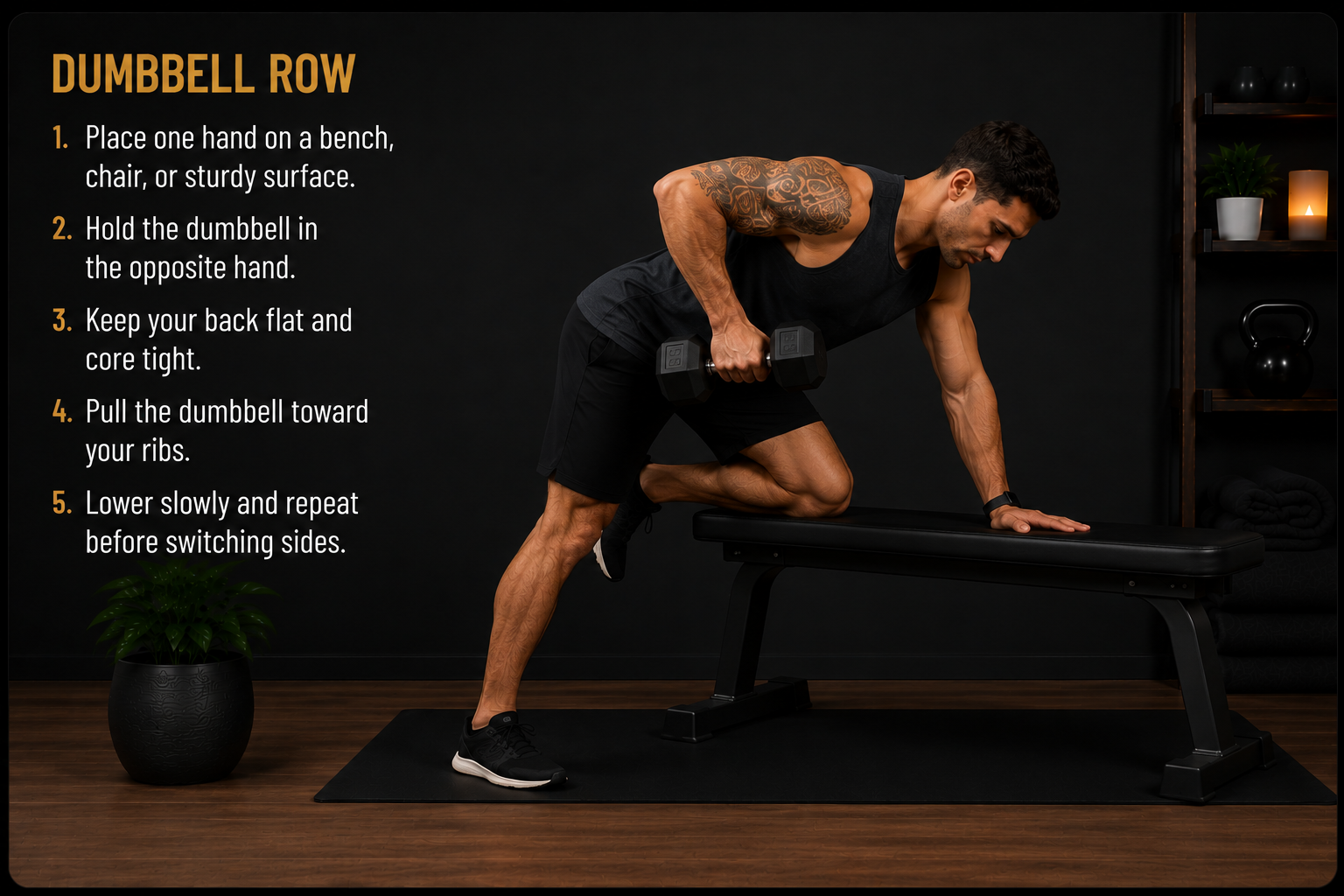
2. Dumbbell Row
- Place one hand on a bench, chair, or sturdy surface.
- Hold the dumbbell in the opposite hand.
- Keep your back flat and core tight.
- Pull the dumbbell toward your ribs.
- Lower slowly and repeat before switching sides.
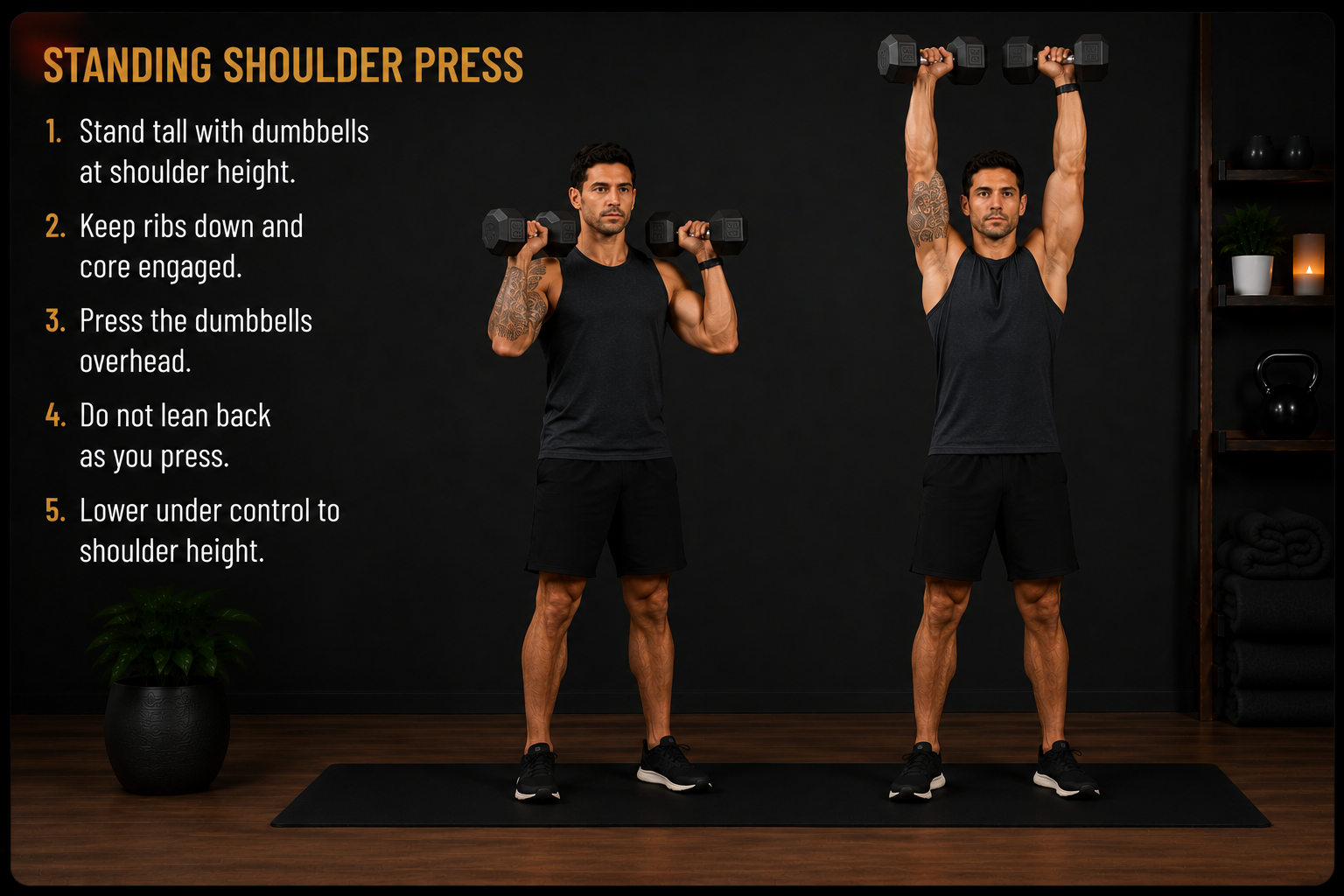
3. Standing Shoulder Press
- Stand tall with dumbbells at shoulder height.
- Keep ribs down and core engaged.
- Press the dumbbells overhead.
- Do not lean back as you press.
- Lower under control to shoulder height.
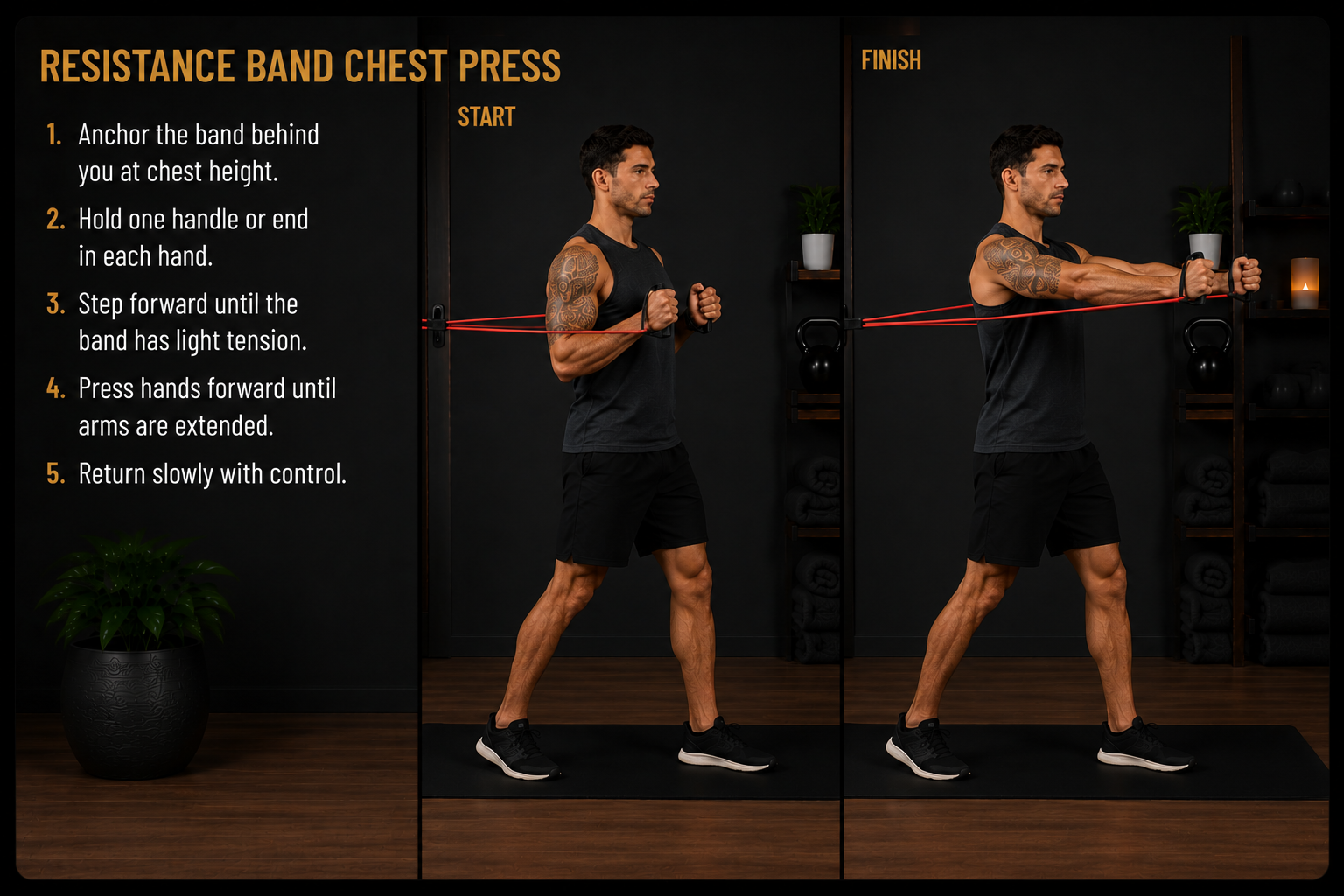
4. Resistance Band Chest Press
- Anchor the band behind you at chest height.
- Hold one handle or end in each hand.
- Step forward until the band has light tension.
- Press hands forward until arms are extended.
- Return slowly with control.
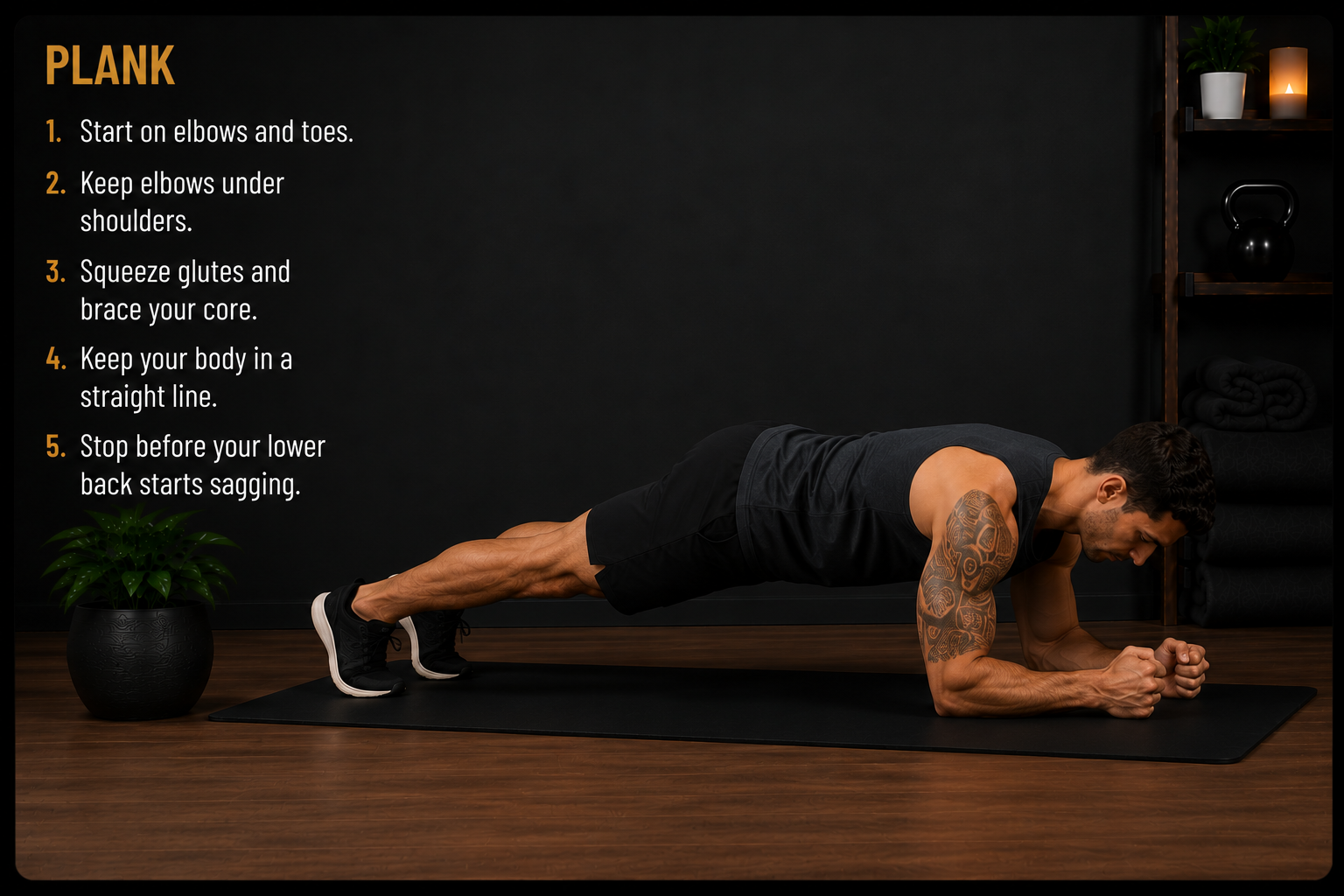
5. Plank
- Start on elbows and toes.
- Keep elbows under shoulders.
- Squeeze glutes and brace your core.
- Keep your body in a straight line.
- Stop before your lower back starts sagging.
Workout B
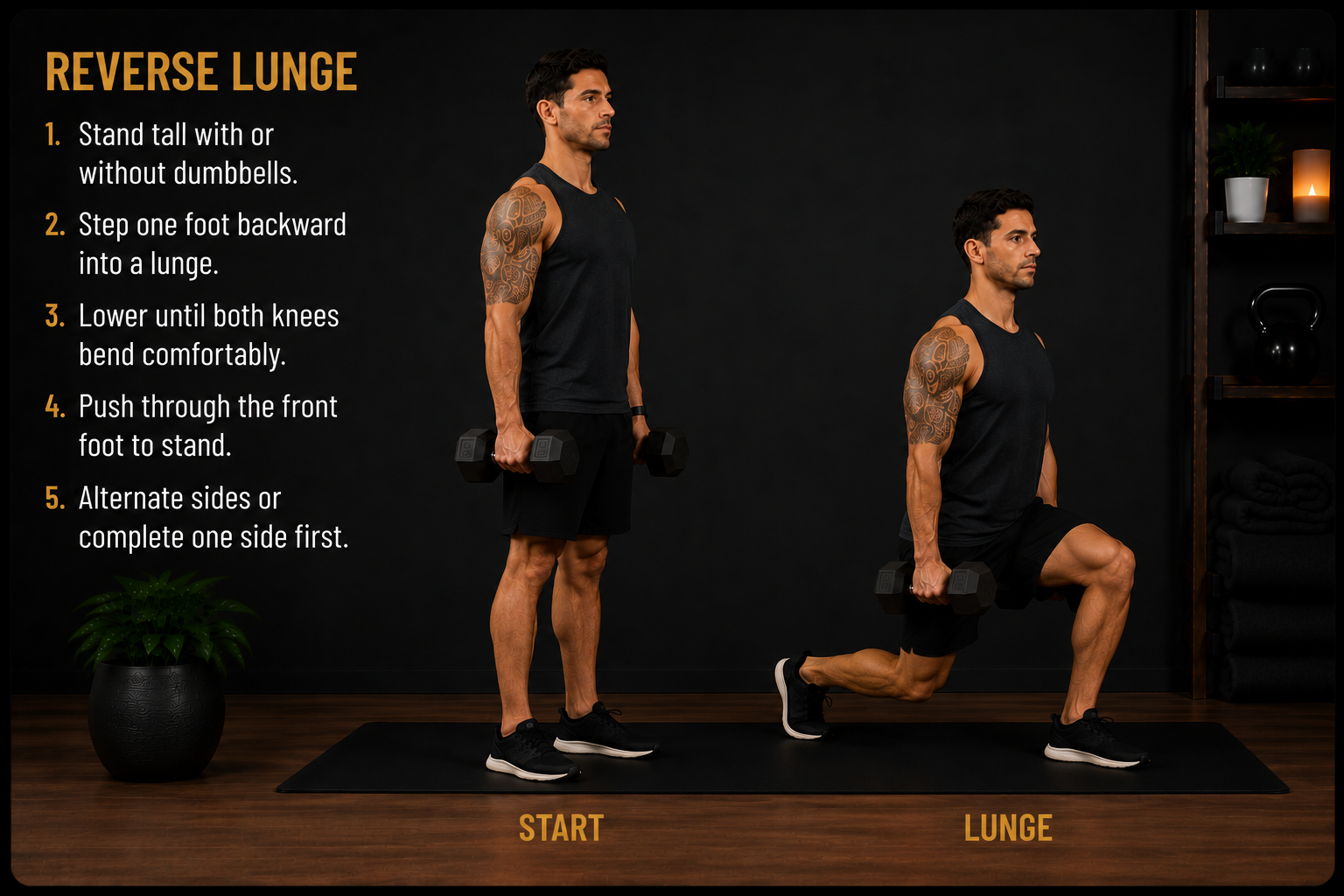
1. Reverse Lunge
- Stand tall with or without dumbbells.
- Step one foot backward into a lunge.
- Lower until both knees bend comfortably.
- Push through the front foot to stand.
- Alternate sides or complete one side first.
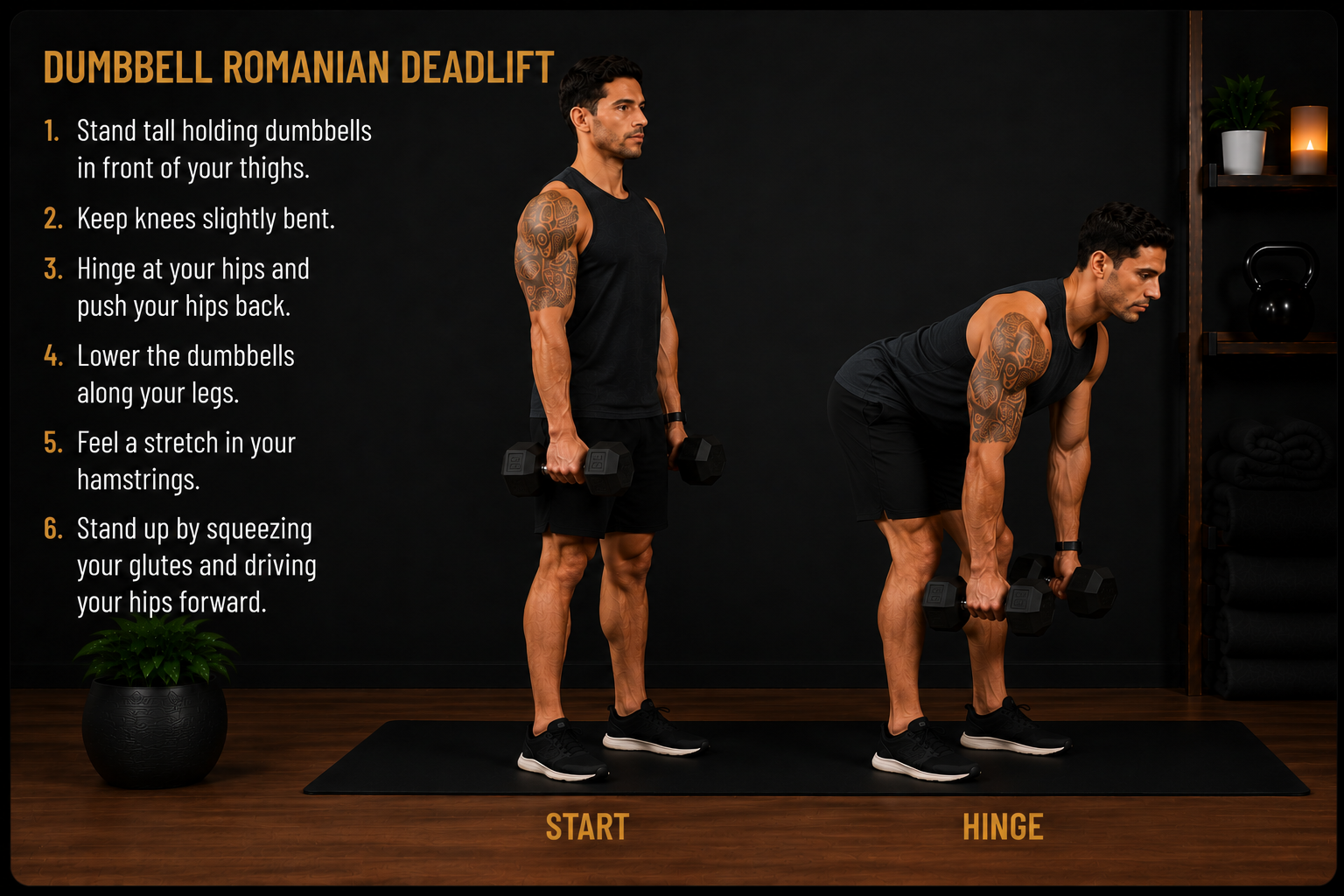
2. Dumbbell Romanian Deadlift
- Hold dumbbells in front of your thighs.
- Keep knees slightly bent.
- Hinge at your hips and push hips back.
- Lower dumbbells along your legs.
- Stand by squeezing your glutes.
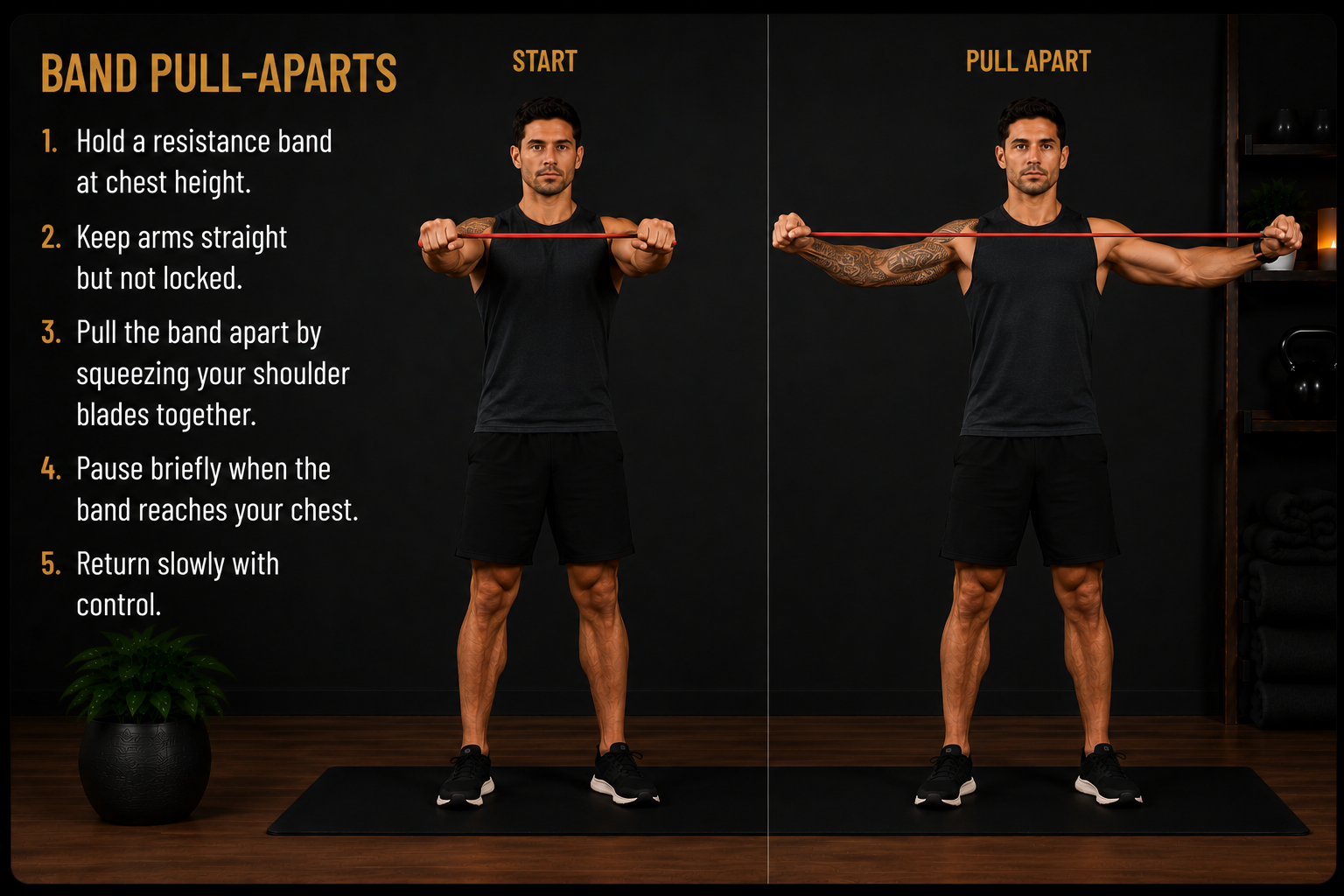
3. Band Pull-Aparts
- Hold a resistance band at chest height.
- Keep arms straight but not locked.
- Pull the band apart by squeezing shoulder blades together.
- Pause briefly when the band reaches your chest.
- Return slowly and repeat.
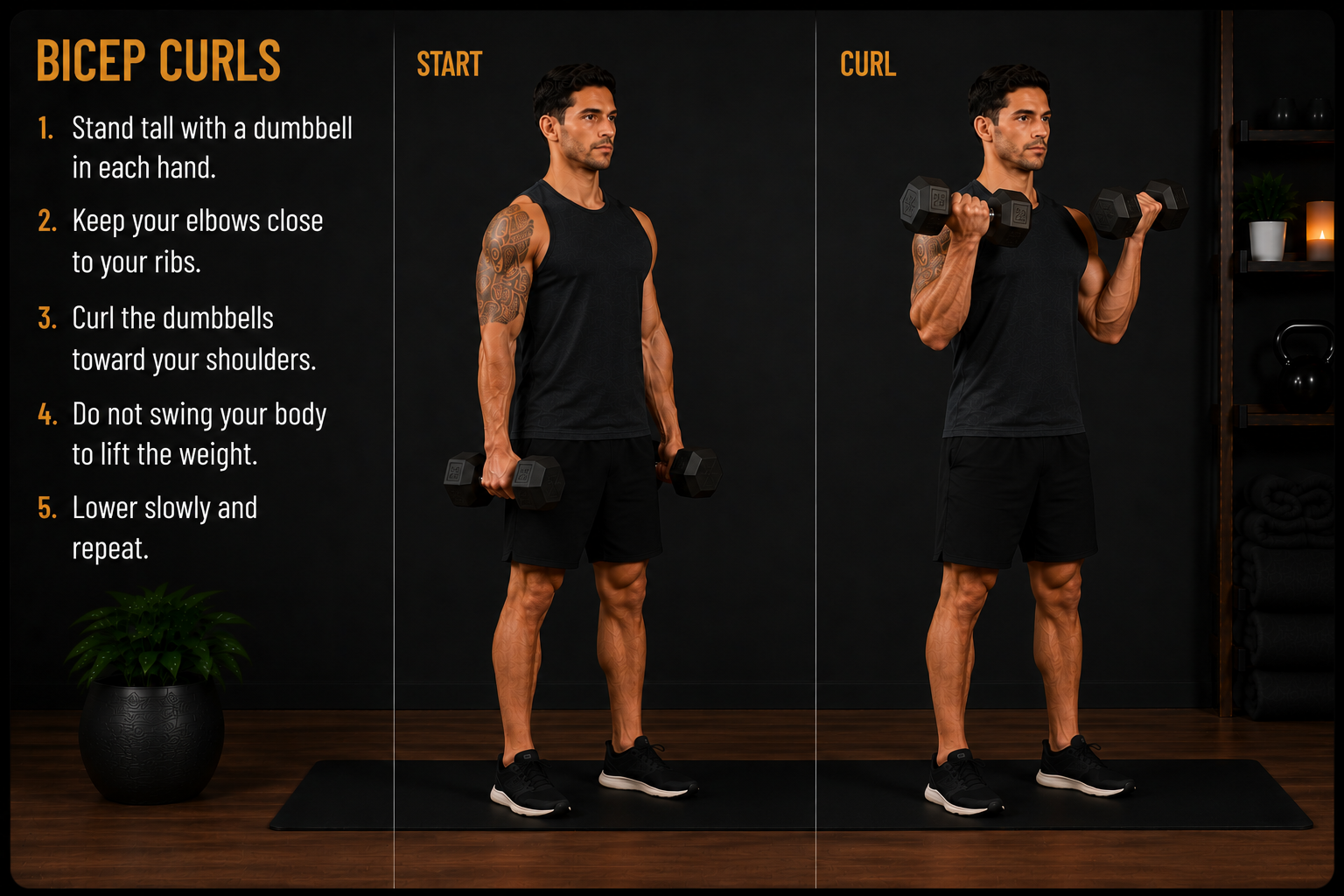
4. Bicep Curls
- Stand tall with dumbbells at your sides.
- Keep elbows close to your ribs.
- Curl the dumbbells toward your shoulders.
- Do not swing your body to lift the weight.
- Lower slowly and repeat.
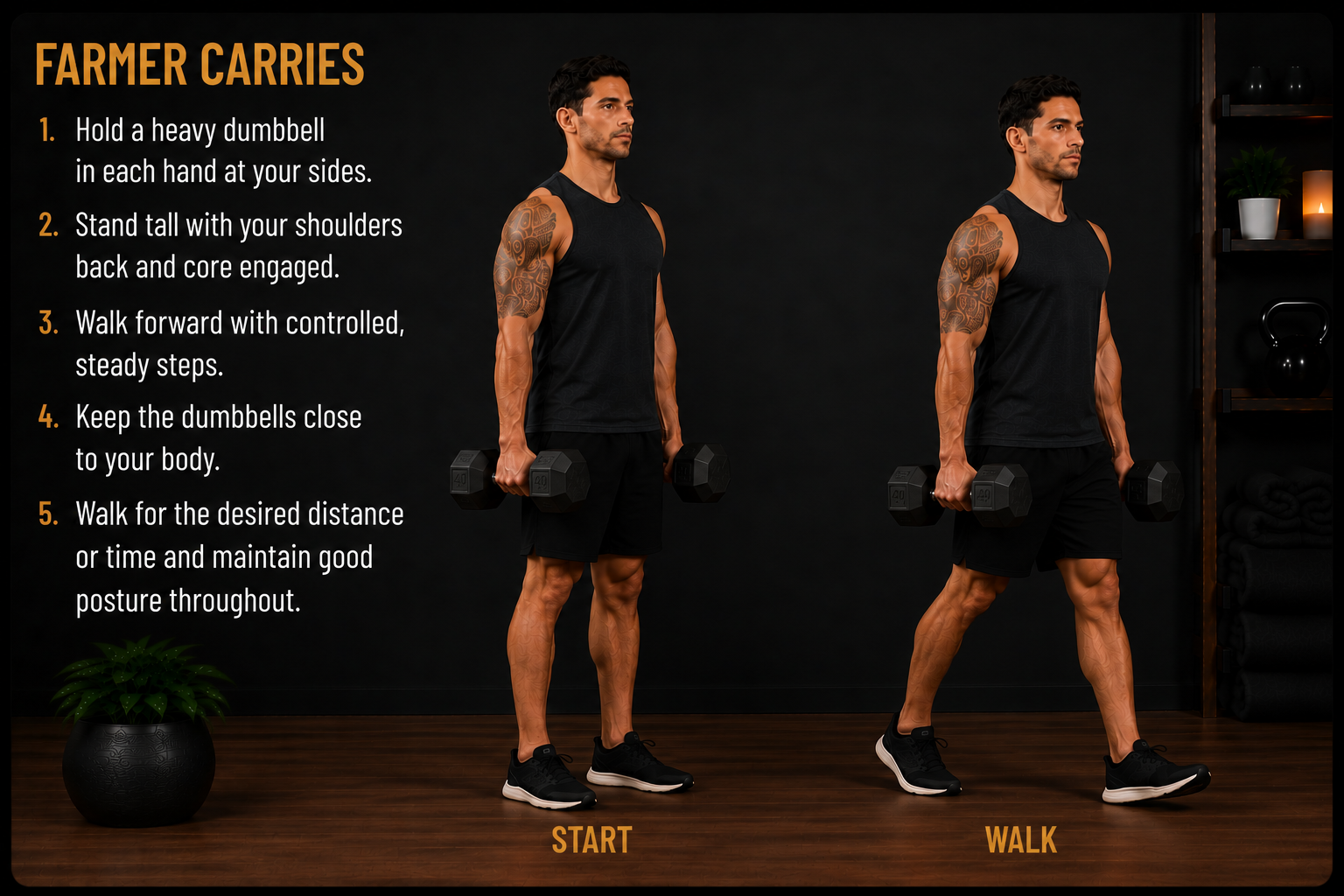
5. Farmer Carry
- Hold a dumbbell in each hand.
- Stand tall with shoulders down and back.
- Brace your core.
- Walk slowly and under control.
- Stop before your posture breaks down.
Progression
Alternate Workout A and Workout B each week. Start with controlled reps and clean form. Add difficulty slowly by improving range of motion, slowing the tempo, increasing reps, or reducing rest time.
Phase 2: Strength & Balance Development
Open after completing Phase 1
Phase 2 begins once strength training feels routine, walking is consistent, and Couch-to-5K has started. The goal shifts from simply exercising to building strength, balance, coordination, and long-term durability.
Phase 2 Weekly Schedule
Workout A - Strength Foundation
- Goblet Squat – 4 x 8
- Dumbbell Row – 4 x 8
- Standing Shoulder Press – 4 x 8
- Plank – 3 x 45 seconds
- Farmer Carries – 3 x 60 seconds
Workout B - Balance & Stability
- Reverse Lunges – 3 x 10 each leg
- Single-Leg Romanian Deadlift – 3 x 8 each leg
- Band Pull-Aparts – 3 x 20
- Single-Arm Farmer Carry – 3 x 45 seconds each side
- Side Plank – 3 x 30 seconds each side
Workout C - Athletic Strength
- Goblet Squat – 3 x 12
- Dumbbell Romanian Deadlift – 4 x 10
- Push-Ups (Incline if needed) – 3 x max reps
- Bicep Curls – 3 x 12
- Farmer Carries – 4 x 60 seconds
Balance Training Progression
Balance work becomes a permanent part of the program. Five minutes at the end of each workout is enough.
- Stand on one foot
- 30 seconds each side
- 3 rounds
- Single-leg reach
- Single-leg deadlift
- Eyes-forward balance
- Eyes closed balance
- Single-arm carries
- Walking lunges
Strength Progression Rules
- Perfect form before increasing reps.
- Increase reps before increasing difficulty.
- Slow down the lowering phase to increase challenge.
- Add balance challenges before buying heavier weights.
- Never sacrifice mobility for strength.
Success Markers
Morning Yoga & Mobility
This routine focuses heavily on tight hips while still helping the spine, shoulders, hamstrings, and low back. Do it every morning for 10-15 minutes.
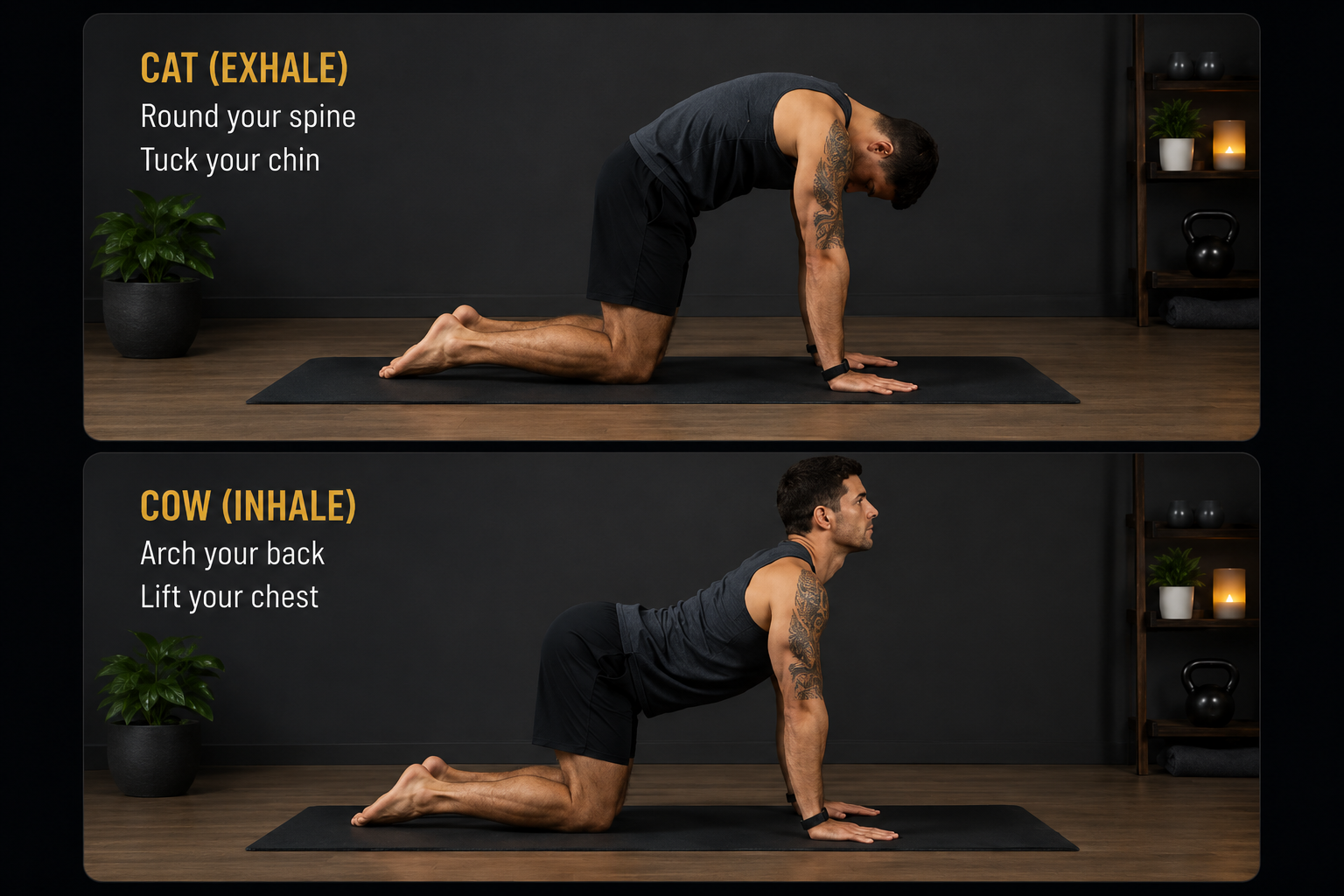
1. Cat-Cow
- Start on hands and knees.
- Place hands under shoulders and knees under hips.
- Inhale as you arch your back and lift your chest.
- Exhale as you round your spine and tuck your chin.
- Move slowly with your breath for 10-15 reps.
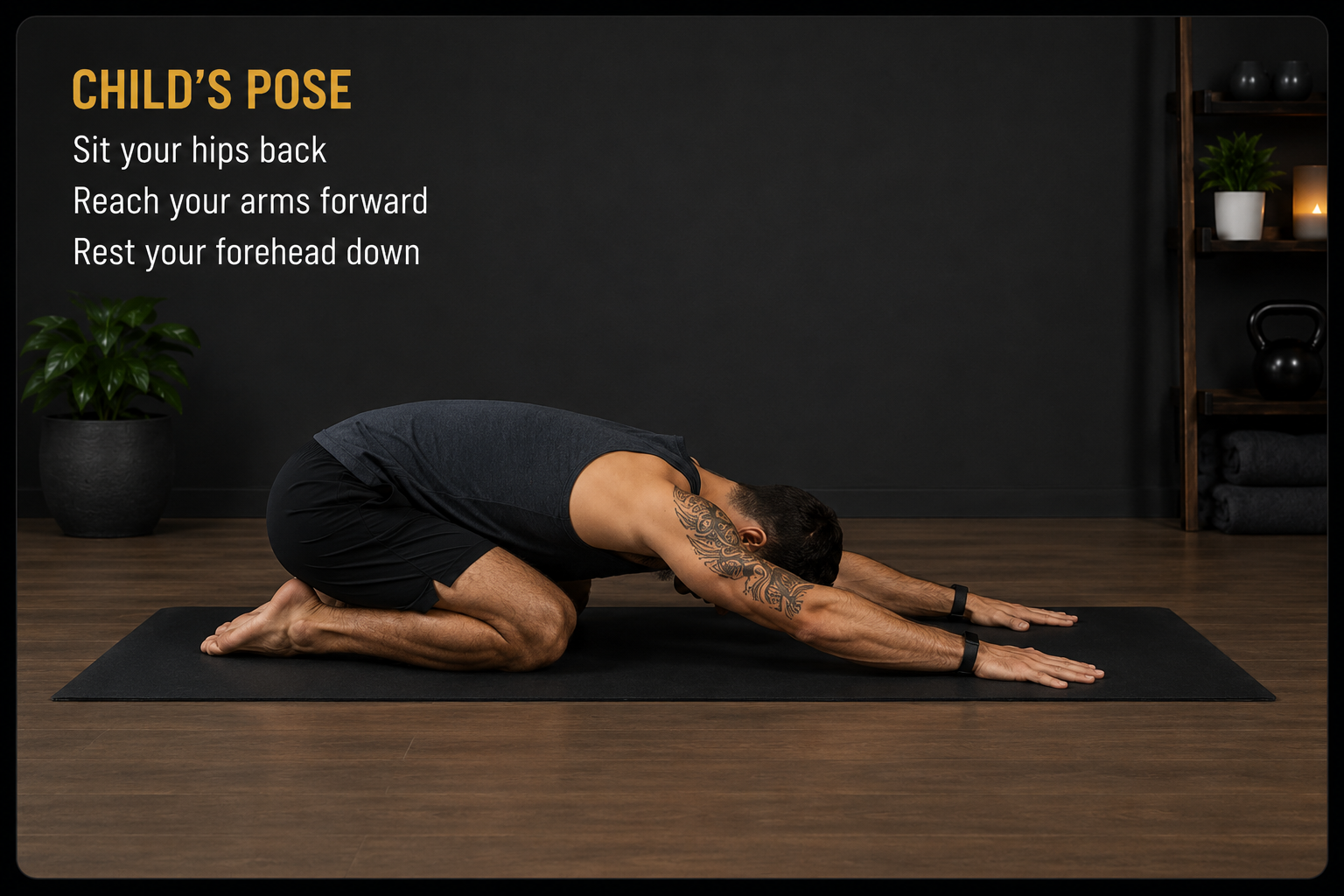
2. Child's Pose
- Kneel on the floor with big toes together.
- Sit your hips back toward your heels.
- Reach your arms forward.
- Relax your forehead toward the floor.
- Breathe deeply into your back and ribs.
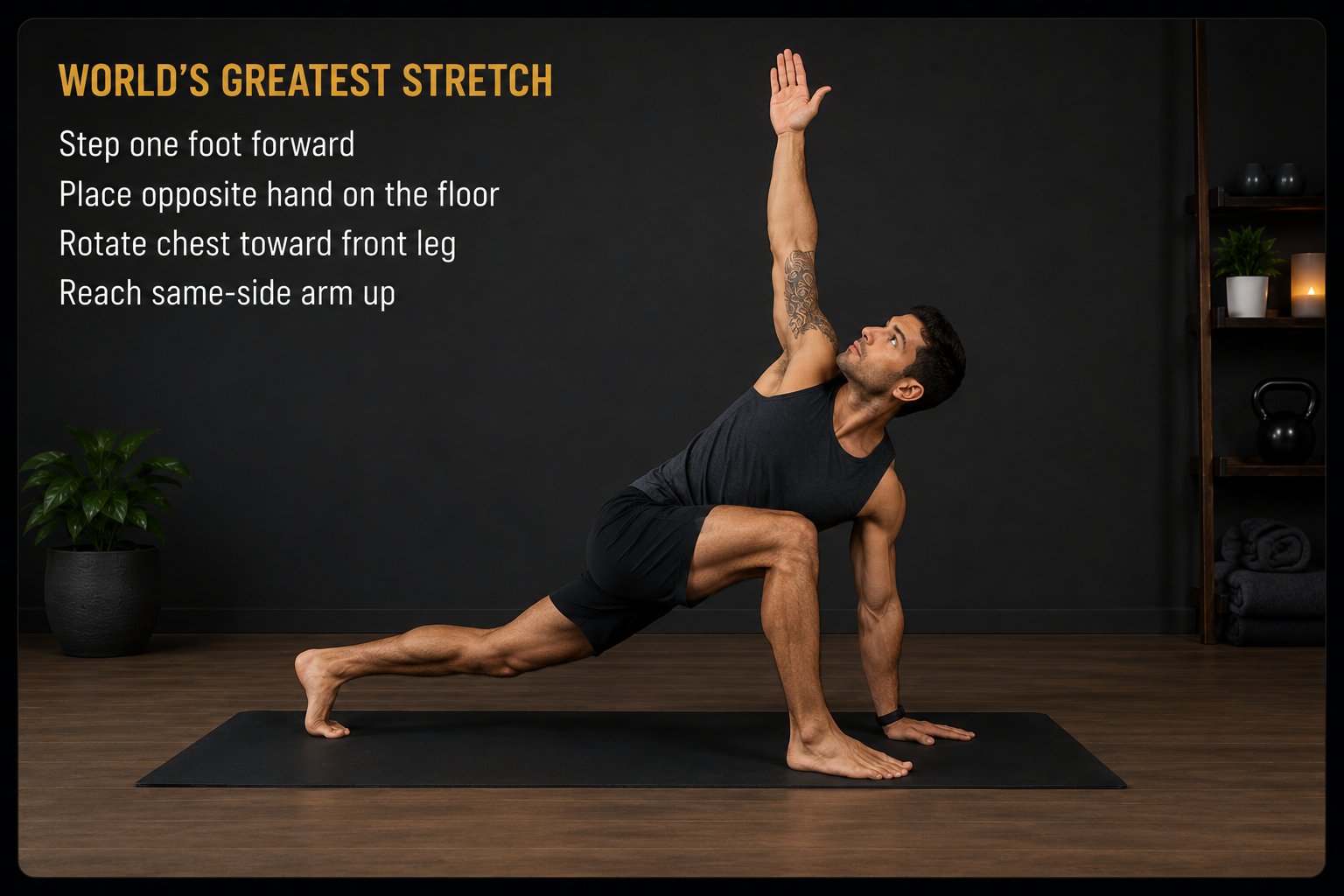
3. World's Greatest Stretch
- Step one foot forward into a long lunge.
- Place the opposite hand on the floor.
- Rotate your chest toward the front leg.
- Reach the same-side arm toward the ceiling.
- Return slowly and repeat before switching sides.
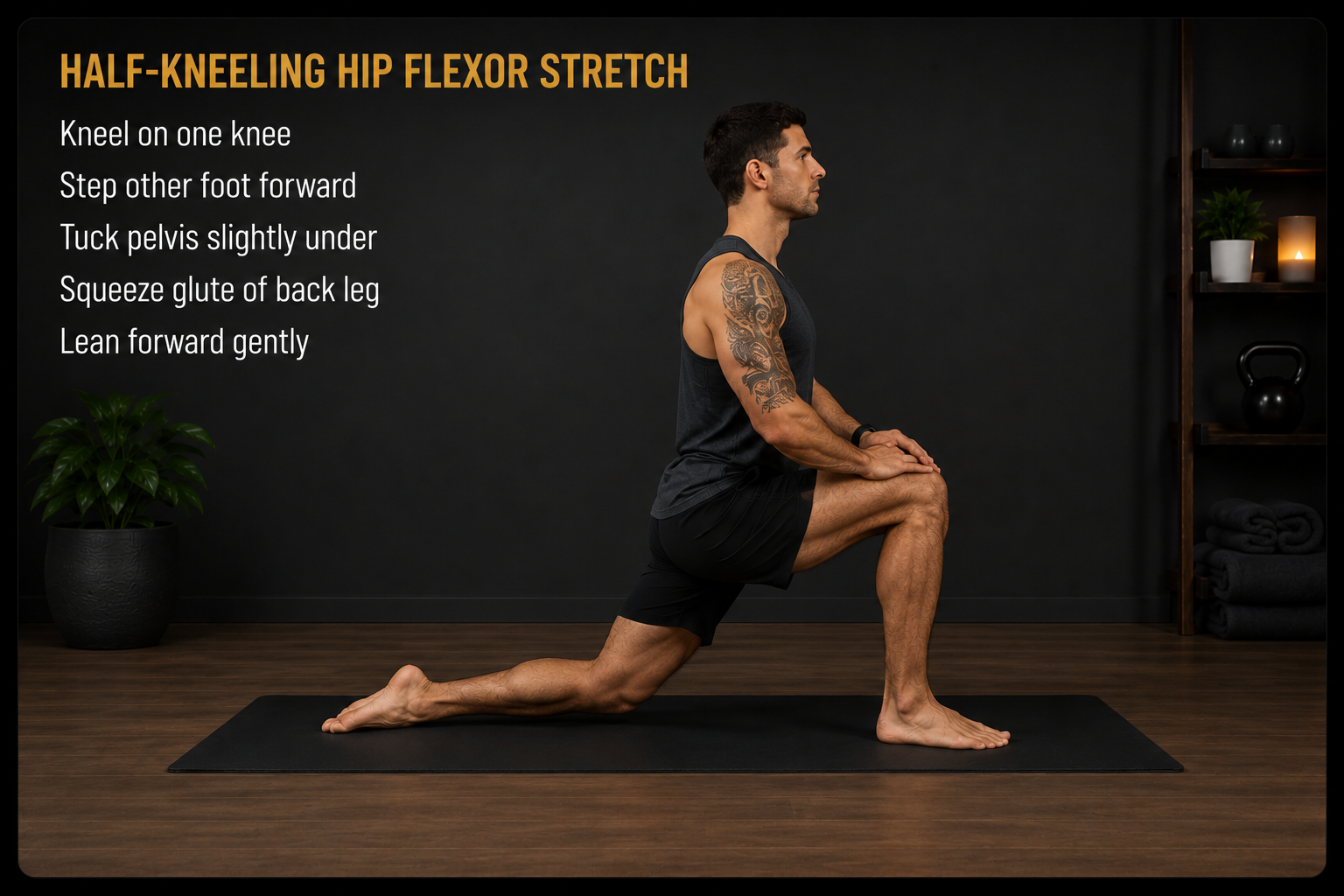
4. Half-Kneeling Hip Flexor Stretch
- Kneel on one knee with the other foot flat in front.
- Keep your chest tall.
- Squeeze the glute on the kneeling side.
- Shift your hips forward slightly.
- Hold without arching your lower back.
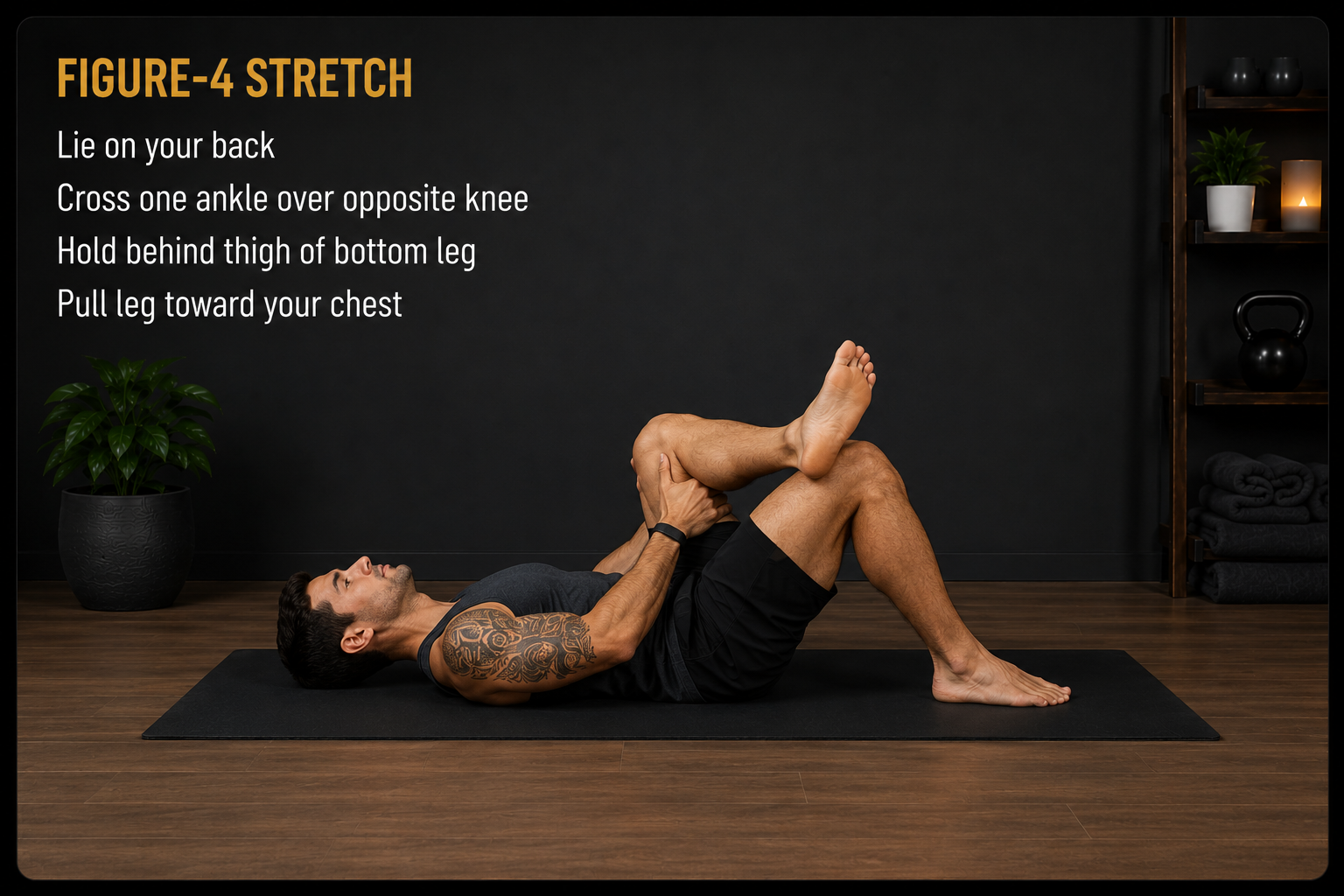
5. Figure-4 Stretch
- Lie on your back.
- Cross one ankle over the opposite knee.
- Pull the lower leg gently toward your chest.
- Keep your head and shoulders relaxed.
- Hold, then switch sides.
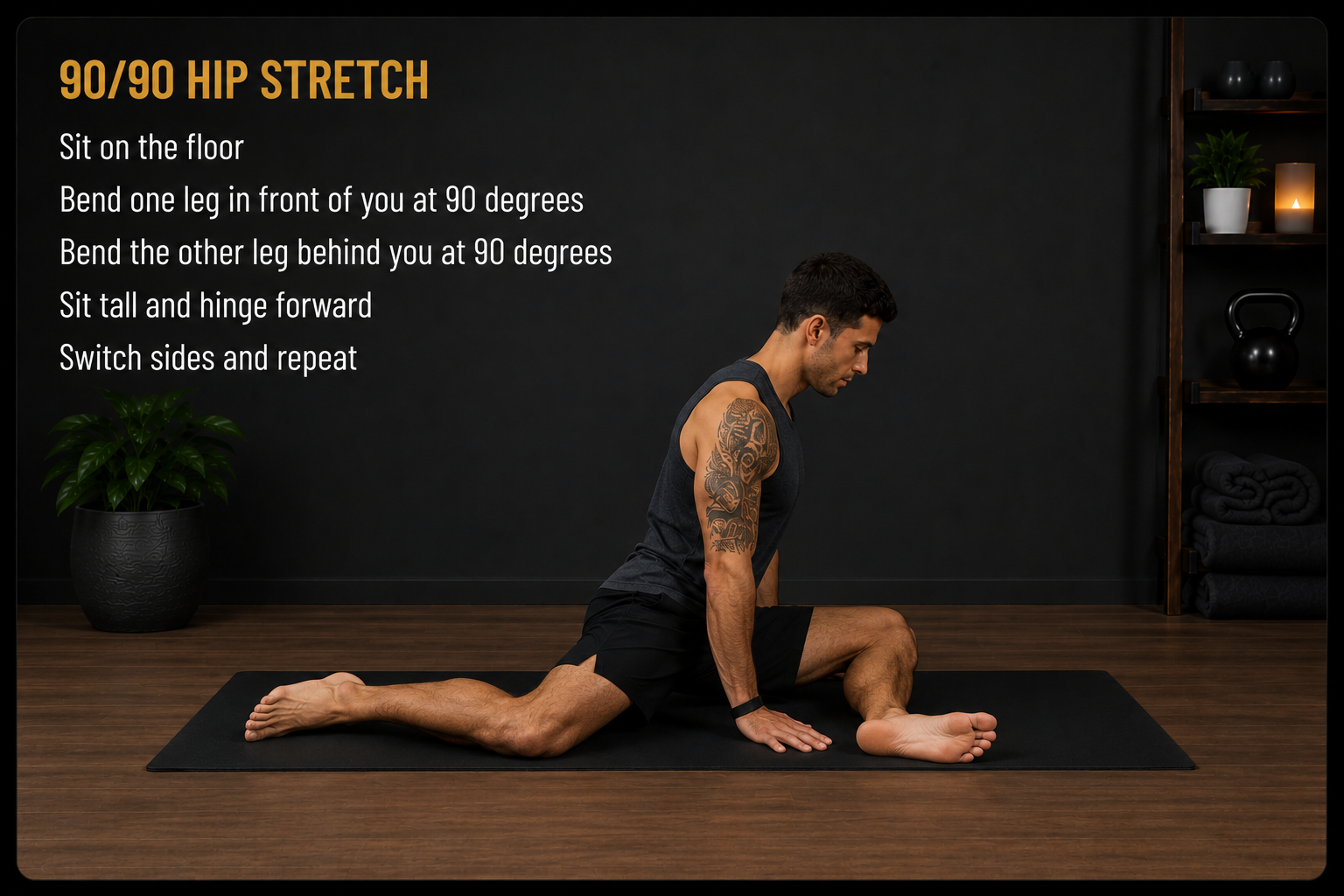
6. 90/90 Hip Stretch
- Sit with your front leg bent at 90 degrees.
- Position your back leg bent at 90 degrees behind you.
- Sit tall through your spine.
- Lean forward gently over the front leg.
- Keep the stretch controlled and pain-free.
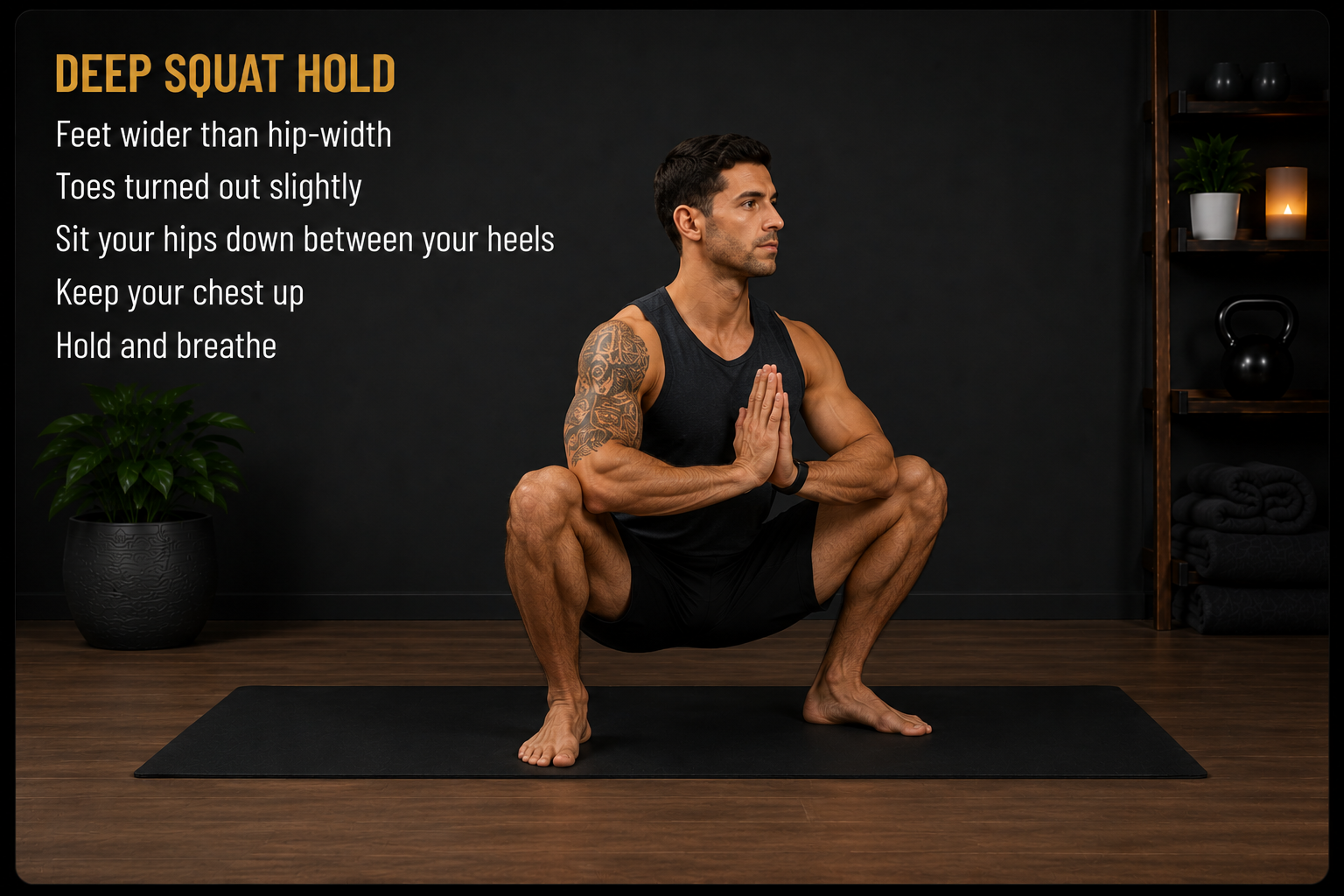
7. Deep Squat Hold
- Stand with feet about shoulder-width apart.
- Lower into the deepest squat you can comfortably hold.
- Hold a countertop or door frame if needed.
- Keep heels down as much as possible.
- Breathe and let the hips open gradually.
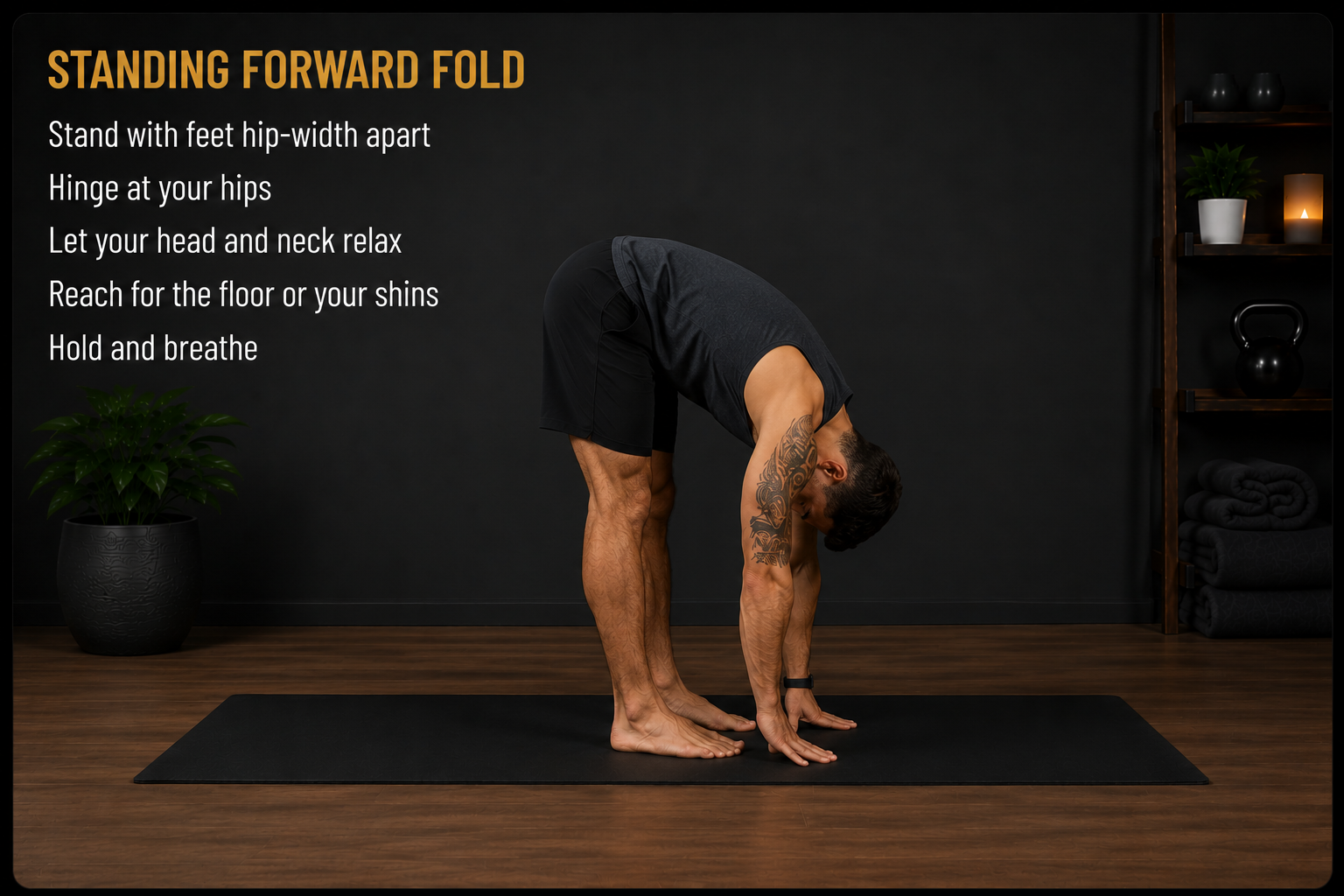
8. Standing Forward Fold
- Stand tall with feet hip-width apart.
- Hinge forward from the hips.
- Keep knees soft instead of locked.
- Let your arms, neck, and shoulders relax.
- Come up slowly when finished.
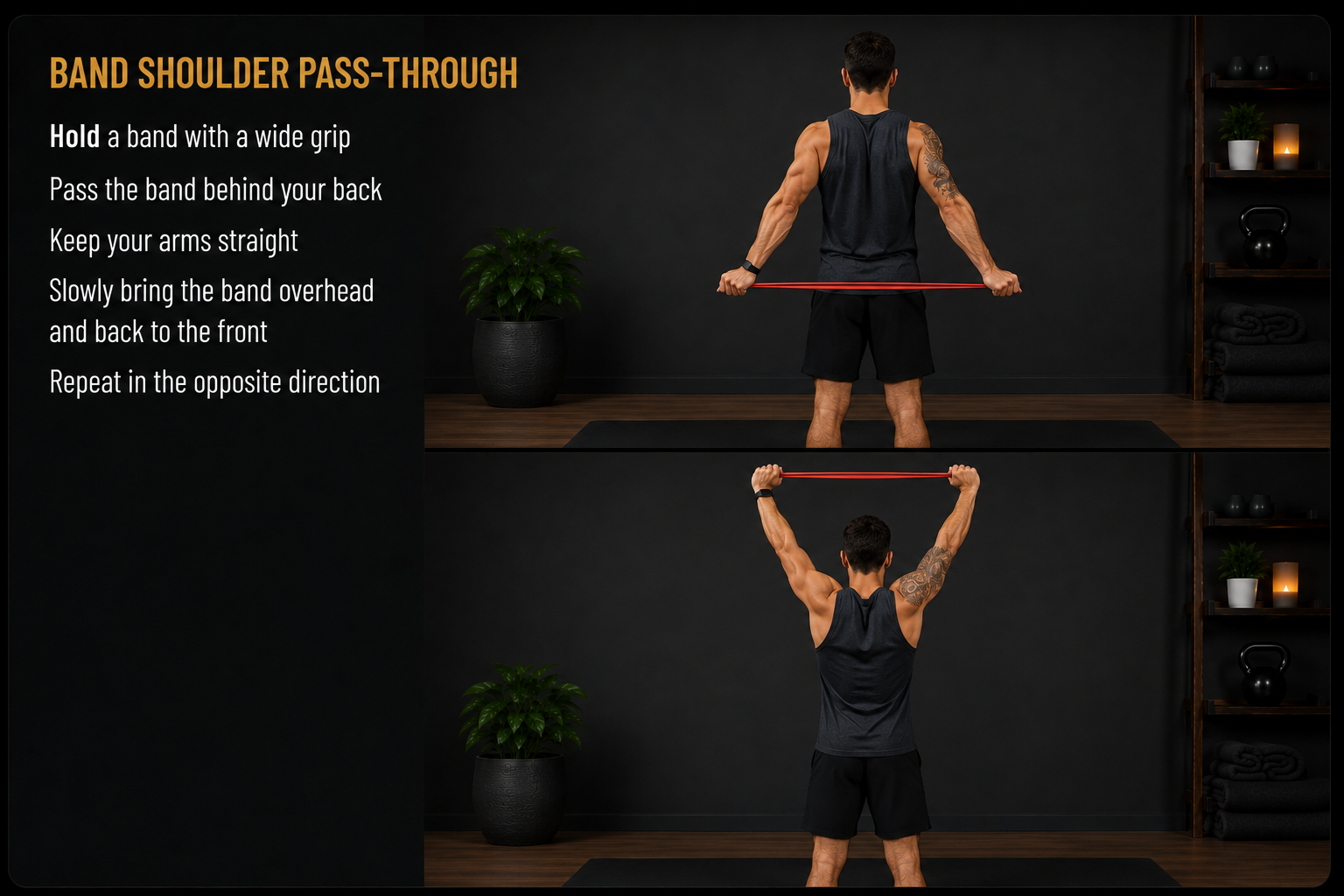
9. Band Shoulder Pass-Through
- Hold a resistance band wider than shoulder-width.
- Keep arms mostly straight.
- Raise the band overhead.
- Move slightly behind the body only if comfortable.
- Return slowly and repeat.
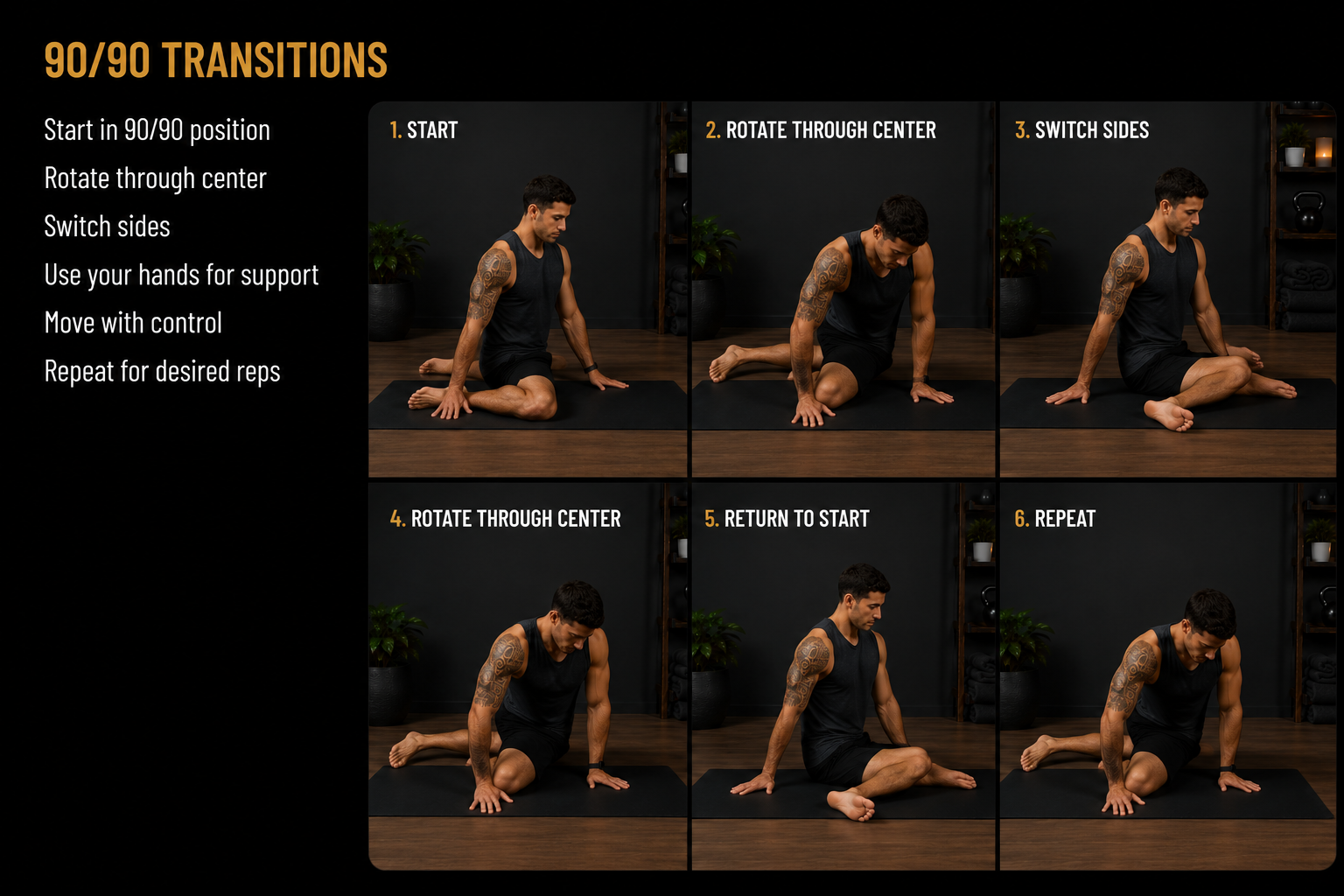
Bonus: 90/90 Transitions
- Start seated in the 90/90 position.
- Rotate both knees slowly to the opposite side.
- Keep your torso as tall as possible.
- Use your hands for support at first if needed.
- Move under control instead of rushing.